Manchester United’s Debt Crisis: A Financial Quagmire Threatening a Footballing Giant

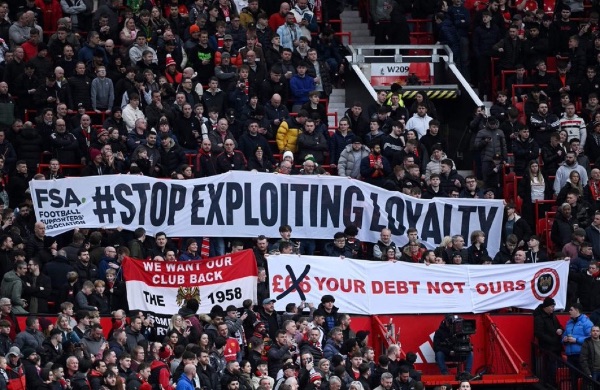
Manchester United, one of the most storied and successful football clubs in the world, has been grappling with a financial crisis that has cast a long shadow over its illustrious history. Despite boasting record revenues and a global fanbase, the club’s financial health has been undermined by a staggering debt burden, primarily stemming from the Glazer family’s leveraged buyout in 2005. This blog post delves into the origins of Manchester United’s debt problems, their current financial state, the impact on the club’s operations, and potential pathways to recovery, supported by analytical data and charts to illustrate the scale of the issue.
The Origins of Manchester United’s Debt
The root of Manchester United’s financial troubles can be traced back to 2005, when the Glazer family acquired the club through a leveraged buyout (LBO). Unlike traditional acquisitions, where buyers use their own funds, the Glazers financed the £790 million purchase primarily through loans, with approximately £660 million of debt placed directly onto the club’s balance sheet. This meant Manchester United, not the Glazers, became responsible for repaying the loans and their associated interest, a burden that has persisted for two decades.
The LBO model fundamentally altered the club’s financial structure. At the time of the acquisition, Manchester United was a financially robust entity with minimal debt. The Glazers’ strategy, however, saddled the club with a debt pile that has since ballooned due to interest payments, refinancing, and additional borrowings. By 2025, the club’s total debt stands at approximately £731 million, comprising $650 million in long-term debt and £210 million drawn from a revolving credit facility, alongside over £300 million in transfer debt owed to other clubs.
The Glazers have also drawn significant criticism for extracting dividends from the club while it struggles under this debt. Since 2005, over £1 billion has been paid in interest alone, with additional sums withdrawn as dividends, further straining the club’s finances. This financial mismanagement has sparked outrage among fans and the Manchester United Supporters’ Trust (MUST), who argue that the debt is the “original sin” in the club’s decline.
The Current Financial Landscape
Manchester United’s financial situation in 2025 is a tale of contrasts: a commercial powerhouse with record revenues but crippled by persistent losses and mounting debt. Below is a detailed breakdown of the club’s financial state, supported by recent data:
• Total Debt: As of the latest financial reports, Manchester United’s gross debt stands at £731.5 million, with $650 million in long-term debt and £210 million on the revolving credit facility. Additionally, the club owes £319 million in transfer debt, with £154 million due within the next year.
• Interest Payments: The club paid £35.5 million in interest during the 2023-24 season, with £18.8 million in the first half of the 2024-25 season alone. Over the past two decades, interest payments have exceeded £1 billion, a staggering figure that highlights the long-term cost of the Glazer’s LBO.
• Revenue and Losses: Despite generating record revenues of £661.8 million in the 2023-24 fiscal year, the club reported a net loss of £113.2 million, marking the fifth consecutive year of losses. Over the past three years, pre-tax losses have totaled £312.9 million, bringing the club perilously close to breaching the Premier League’s Profit and Sustainability Rules (PSR), which cap losses at £105 million over three years.
• Operating Expenses: Total operating expenses for 2023-24 reached £768.5 million, a 12.8% increase from the previous year, driven by a 10.1% rise in wages to £364.7 million due to Champions League participation. Amortisation costs, primarily related to player transfers, hit £102.7 million in the first half of 2024-25 and are projected to exceed £200 million by season’s end.
• Cash Flow Issues: Cash reserves have dwindled significantly since pre-pandemic levels, dropping from £307.6 million in 2019 to £73.5 million in 2024. The club’s reliance on the revolving credit facility—essentially a “credit card” with a £300 million limit—has exacerbated its cash flow problems.
To visualize the scale of Manchester United’s debt, the following chart illustrates the club’s total debt and interest payments over time:
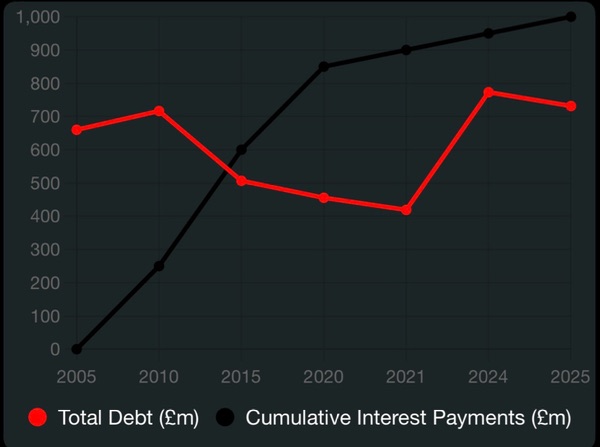
This chart highlights the persistent debt burden and the escalating cost of interest payments, which have grown to over £1 billion since the Glazer takeover.
Impact of the Debt Crisis
The debt crisis has had far-reaching consequences for Manchester United, both on and off the pitch:
1. On-Field Performance: The club’s financial constraints have coincided with a decline in sporting success. Since their last Premier League title in 2013, United have struggled to compete consistently, finishing 15th in the 2024-25 season and failing to qualify for European competitions, which could cost £20-80 million in broadcast revenue. High transfer spending—over £600 million under former manager Erik ten Hag—has yielded disappointing results, with the team described as “Europa League fodder spending like Champions League winners.”
2. Fan Discontent: The Glazers’ debt-laden ownership has fueled fan protests, particularly over ticket price hikes. In 2024-25, matchday ticket prices rose to £66 per game with no concessions for children or pensioners, a move projected to raise less than £2 million—negligible compared to the club’s debt but deeply damaging to fan sentiment. MUST has called for a ticket price freeze, arguing that fans should not bear the cost of financial mismanagement.
3. Cost-Cutting Measures: Under Sir Jim Ratcliffe’s minority ownership (27.7% stake acquired in February 2024), the club has implemented aggressive cost-cutting, including 250 staff redundancies, cuts to staff benefits, and the termination of Sir Alex Ferguson’s ambassadorial role. These measures aim to save £30-40 million annually but have drawn criticism for their impact on morale and the club’s heritage.
4. PSR Compliance: Manchester United’s £312.9 million pre-tax losses over three years put them at risk of breaching PSR, with only £16 million of headroom remaining. The club’s compliance relies on allowances and deductions, such as costs related to Ratcliffe’s share purchase, but the situation remains precarious.
Pathways to Recovery
Despite the bleak financial outlook, Manchester United remains a commercial juggernaut with the fourth-highest revenues in world football (£651.3 million in 2024, per Deloitte’s Football Money League). The following strategies could help the club address its debt crisis and restore its former glory:
1. Debt Reduction: The Glazers could inject personal funds to reduce the debt, as suggested by MUST, alleviating the burden of interest payments. Alternatively, Ratcliffe’s £238.5 million equity injection could be followed by further investments to pay down the revolving credit facility.
2. Improved On-Field Performance: Success on the pitch is critical for financial recovery. Each league position climbed is worth approximately £3-4 million in prize money, and qualification for the Champions League could generate £50-80 million in broadcast revenue. Focusing on winning the Europa League, as suggested by football finance expert Kieran Maguire, could secure a return to the Champions League.
3. Strategic Transfer Policy: United must address their “disastrous record in player trading” by prioritizing youth development and cost-effective signings. Reducing the wage bill, currently £364.7 million, by offloading high-earners like Casemiro and Rashford could free up funds for squad investment.
4. Infrastructure Investment: Redeveloping or rebuilding Old Trafford could enhance matchday revenue, but this will require careful financial planning to avoid further debt. Ratcliffe’s task force is exploring these options, but additional borrowing must be managed prudently.
5. Fan Engagement: Freezing ticket prices and engaging with supporters could rebuild trust and improve the atmosphere at Old Trafford, which has been linked to better on-pitch performances.
The following chart compares Manchester United’s revenue and losses over recent years, underscoring the need for financial discipline:
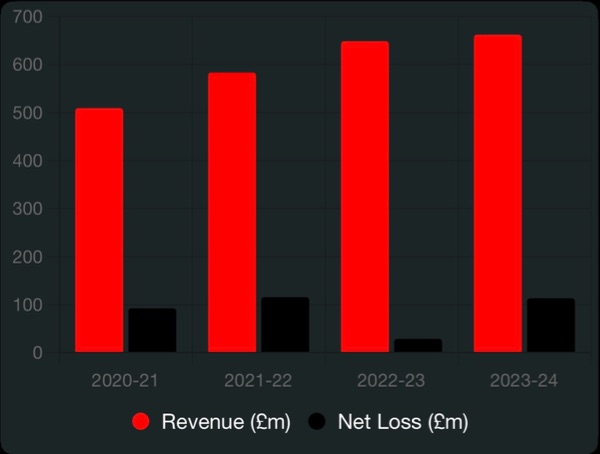
This chart illustrates the disconnect between United’s robust revenue growth and persistent losses, driven by high operating costs and debt servicing.
Conclusion
Manchester United’s debt crisis, rooted in the Glazer family’s 2005 leveraged buyout, remains a significant barrier to the club’s return to footballing dominance. With a total debt of £731.5 million, over £1 billion in interest payments since 2005, and ongoing losses, the club faces a precarious financial future. The combination of high transfer spending, rising wages, and a failure to secure consistent Champions League football has exacerbated the issue, while cost-cutting measures and ticket price hikes have alienated fans.
However, there is hope. Sir Jim Ratcliffe’s investment and leadership in football operations signal a commitment to change, but meaningful recovery will require reducing the debt burden, improving on-field performance, and rebuilding trust with supporters. Manchester United’s global brand and commercial strength provide a foundation for recovery, but only with prudent financial management and a unified effort from owners, players, and fans can the club restore its place among Europe’s elite.
As the club navigates this challenging period, the words of MUST resonate: “Fans should not pay the price for a problem that starts with our crippling debt interest payments and is exacerbated by a decade or more of mismanagement.” The road ahead is daunting, but with the right strategy, Manchester United can overcome its financial quagmire and reclaim its status as a footballing powerhouse.