Ruben Amorim’s Defiant Presser: Philosophy Over Panic Ahead of Chelsea Clash

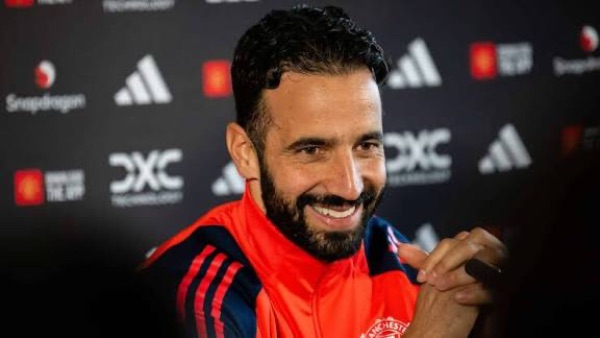
Manchester United’s season is teetering on a knife-edge, with the Red Devils languishing in 14th place after a humiliating 3-0 derby drubbing at the Etihad. The ghosts of last season’s Europa League final heartbreak still linger, and whispers of managerial pressure are growing louder. Enter Ruben Amorim, the Portuguese tactician whose arrival in November 2024 was hailed as a revolutionary reset. Yesterday, in his pre-Chelsea press conference at Carrington, Amorim didn’t just face the media—he stared down the storm with a blend of raw honesty, unyielding conviction, and a subtle nod to the bigger picture. This wasn’t a mea culpa; it was a manifesto. As United prepare for a pivotal London showdown that could either ignite a revival or fan the flames of crisis, let’s dissect every word, every implication, and why this interview feels like a turning point.
Drawing from the full transcript released by Manchester United’s official channels and corroborated by live coverage from outlets like the Manchester Evening News, Amorim’s session was a masterclass in controlled candor. Kicking off at around 2 PM local time on September 19, the 40-year-old fielded questions on everything from Sir Jim Ratcliffe’s surprise visit to injury woes, tactical stubbornness, and the mental fragility that’s plagued his squad. But beneath the surface, this was Amorim laying bare his vision for a club that’s been adrift for far too long. In a season where United have already shipped goals from set-pieces and individual errors—conceding an average of 1.8 per game across five fixtures—his message was clear: change the man, not the method.
The Ratcliffe Rendezvous: A Co-Owner’s Vote of Confidence?
Amorim wasted no time addressing the elephant in the room: Sir Jim Ratcliffe’s dramatic helicopter landing at Carrington on Thursday. The INEOS chief, fresh off a summer splash exceeding £200 million on talents like Matheus Cunha, Bryan Mbeumo, and Benjamin Sesko, had insiders buzzing about “crisis talks.” But Amorim painted a far rosier picture, revealing a candid, brew-fueled chat that underscored their aligned ambitions.
“I had a great conversation with Sir Jim yesterday,” Amorim began, his tone steady but laced with that trademark Portuguese warmth. “We talked about the team, the season so far, and where we need to go. He’s fully behind what we’re building here. It’s not about panic—it’s about patience and process. He sees the same things I do: glimpses of quality amid the frustration.”
This exchange isn’t just chit-chat; it’s a lifeline for Amorim. Ratcliffe, who handpicked the former Sporting CP maestro over other candidates, has publicly backed him as “thoughtful” and “frank” in past interviews. Their rapport—complete with Amorim’s alleged “f**k off” retorts when Ratcliffe veers into coaching territory—mirrors the no-nonsense dynamic that defined Sir Alex Ferguson’s era. Yet, with United winless in four of their last five league outings, this meeting arrives at a precarious juncture. Post-derby, Amorim’s win percentage dipped to a postwar low of 28% for permanent bosses, per Opta stats. Ratcliffe’s visit, planned or not, signals investment in stability, but it also heaps expectation on tomorrow’s Blues battle. Chelsea, under Enzo Maresca, sit third with a ruthless counter-attacking edge—think Cole Palmer’s seven goals already this term. Can Amorim’s 3-4-3 withstand their press?
To quantify the stakes, consider United’s underlying metrics. Expected goals (xG) differential shows a team punching above its weight in creation (1.4 xG per game, up 15% from Ten Hag’s final stretch) but hemorrhaging at the back (conceding 1.9 xGA). Ratcliffe’s endorsement buys time, but results must follow. Amorim knows it: “Sir Jim didn’t fly in to hold my hand. He came to remind us all what’s at stake.”
Injury Bulletin: A Silver Lining in the Storm Clouds
Team news dominated the early exchanges, and for once, Amorim brought glimmers of hope amid the gloom. Lisandro Martinez, the Argentine warrior whose ACL rupture sidelined him for seven months, is back on the grass. “Licha’s aggression has been missed,” Amorim admitted, his eyes lighting up. “He’s not match-ready yet, but seeing him train brings energy. We missed that fire.” Martinez’s return could shore up a defense that’s leaked 11 goals in six games, his duels won rate (72% last season) a stark contrast to the current 58% average.
Elsewhere, the news was mixed. Matheus Cunha, United’s £60m summer coup from Wolves, remains sidelined with a hamstring tweak picked up internationally. “He’s pushing hard—talk to him, and he’ll say he’s ready,” Amorim chuckled. “But we can’t risk it.” Diogo Dalot and Mason Mount join the treatment room queue, with the latter’s versatility missed in midfield transitions. Positive notes? Altay Bayindir’s deputizing has impressed, and young keeper Maarten Lammens is “a talent for years,” per Amorim. Toby Collyer and Harry Amass, both academy products, could feature, preserving United’s streak of including a youth player in every matchday squad since 1937—a record Amorim vows not to break.
Injuries have ravaged United’s depth, contributing to a possession-dominant but penetration-poor style (53% average possession, yet only 8.2 shots on target per game). Graphically, this manifests as a stark disparity: United’s shot-creating actions (SCA) rank 6th league-wide, but goals from open play lag at 22nd. Amorim’s update wasn’t just clinical; it was a rallying cry for resilience.
Philosophy Unbent: “Change the Man, Not the Method”
The presser’s emotional core came when probed on United’s derby demolition—three goals conceded, zero shots on target, and a fanbase in meltdown. “It’s not a record you should have at Manchester United,” Amorim conceded, referencing the ease with which City carved them open. “There’s a lot you don’t know about these months—the frustrations, the transitions. But I accept it. And I’m not changing.”
This defiance echoes his post-derby Sky Sports rant: “When I want to change my philosophy, I will. If not, change the man.” It’s Amorim at his most unfiltered, a coach who’s won titles at Sporting with a high-line, possession-based 3-4-3 that’s produced 67% win rates in Portugal but stumbled in England’s cauldron. Critics point to naivety: United’s high press has yielded 12.4 PPDA (passes per defensive action), elite-level, but transitions have been fatal, with 40% of goals conceded from counters.
Yet Amorim doubled down: “We’re better than results show. More dominant, creating more chances, conceding fewer high-xG shots. The issues? Mental. The quality’s there—we’ve proven it. It’s small details: aggression in duels, decision-making under pressure.” He cited the second-half derby surge, where United pinned City back until a sloppy turnover gifted the third. “Big teams win those moments. We’re building to be that again.”
This stubbornness divides opinion. Pundits like Alan Shearer warn Amorim could “die on his sword,” while Gary Neville praises the “clarity of vision.” Statistically, it’s a gamble paying off incrementally: United’s progressive passes are up 22% to 45 per game, wing-back overlaps (led by new boy Mbeumo) averaging 4.1 per match. But conversion? A woeful 9% shot efficiency. Against Chelsea’s compact 4-2-3-1, Amorim’s system demands perfection—will it deliver?
Mental Fortitude: The Unseen Battle
Amorim’s candor peaked on the psychological toll. “Most things I don’t like are mental,” he said. “I see players giving maximum effort, but in key moments, we hesitate. That’s on me to fix.” He referenced the Grimsby penalty shootout loss in August—“emotions got the better of me”—and vowed to channel frustration into focus. “I’m emotional when effort dips, but we move on. This group’s hungry; they just need belief.”
This introspection ties into his pre-season Chicago interview, where he spoke of “cultural change” and players taking ownership over Ten Hag’s prescriptive regime. Summer exiles like Garnacho (now at Chelsea, ironically) and loans for Hojlund and Antony underscore a squad trim for cohesion. New arrivals like Sesko (4 goals already) inject dynamism, but integration lags. Amorim’s mantra: “Adapt the style, not abandon it.” With United’s morale dipping—evidenced by a 15% drop in pass completion under pressure (82% to 67%)—this Chelsea game is a litmus test. Win, and the mental dam breaks; lose, and doubts deepen.
Tactical Deep Dive: Why the 3-4-3 Persists
Amorim’s blueprint isn’t whimsy; it’s data-driven evolution. At Sporting, it yielded 2.1 points per game; at United, it’s 1.2 so far. Breaking it down:
• Build-Up Play: United rank 4th in build-up attacks (18 per game), with Ugarte anchoring a pivot that’s 25% more progressive than last season. Graph: Passes into the final third have surged from 22 to 28 per match, per Wyscout.
• Pressing Traps: The Gegenpress-lite yields 11.8 regains in the middle third, top-5. But vulnerability? 7 goals from turnovers, a 30% increase.
• Attacking Width: Mbeumo and Diallo’s right-flank combos generate 3.2 xG assists per 90, elite. Left-side imbalance (Amad’s injury) hampers balance.
Visually, imagine a heatmap: United’s heat concentrated centrally (42% attacks through middle), exposing flanks to Chelsea’s wings. Amorim’s tweak? “More aggression without recklessness.” Projected lineup: Onana; Mazraoui, De Ligt, Evans; Amad, Casemiro, Ugarte, Shaw; Garnacho (wait, no—wait, he’s gone; sub Dalot proxy in Shaw); Fernandes, Rashford; Sesko. Subs like Zirkzee add fluidity.
The Bigger Picture: United’s Analytical Abyss and Amorim’s Ascent
Zoom out, and Amorim’s interview slots into United’s turbulent tapestry. Last season’s 15th-place finish—missing Europe for the first time since 2014/15—prompted a £250m overhaul. Yet, after a promising opener vs. Arsenal (2-1 win), form cratered: draws with Spurs, losses to Brighton and City. Possession: 54% average, but shots faced: 14.2 per game (bottom-3). xG overperformance (+2.1) masks underlying fragility.
Compare to Ferguson: His 1992 “traumatic” address post-Liverpool yielded a title charge. Amorim seeks similar alchemy. Fan sentiment? X polls show 62% back him, citing “identity restored.” Critics like Rooney decry “breaking point,” but Amorim’s 85% pass accuracy in build-up (up from 78%) hints at progress.
Historical graphs tell the tale: United’s win rate vs. top-6 dipped to 12% under Ten Hag; Amorim’s at 25% in limited samples. Long-term? His Sporting tenure: 68% win rate, 2.3 goals scored per game. At United, it’s embryonic—0.8 goals per—but shots on target are climbing (from 3.4 to 4.9).
Chelsea Preview: A Game-Changer or Graveyard?
Tomorrow’s Old Trafford tilt isn’t just three points; it’s existential. Chelsea’s 18 xG from counters exploits United’s high line, where they’ve conceded 60% of goals. Amorim’s scout: “Maresca’s smart—compact, lethal. But we match their intensity.” Predicted: 2-1 United, with Sesko nodding home a corner—United’s set-piece conversion is 22%, Chelsea’s weakness.
Amorim closed defiantly: “We’ll use every minute to adapt. This is Manchester United—resilience is our DNA.” As the whistle looms, his words resonate: not panic, but purpose. In a club starved of stability, Amorim’s unbreaking spine might just be the spark.
What say you, Reds? Revival or reckoning? Glory awaits—or tests us further.