Manchester United 1998-1999 Season: A Technical Review, Statistics, and Historical Context

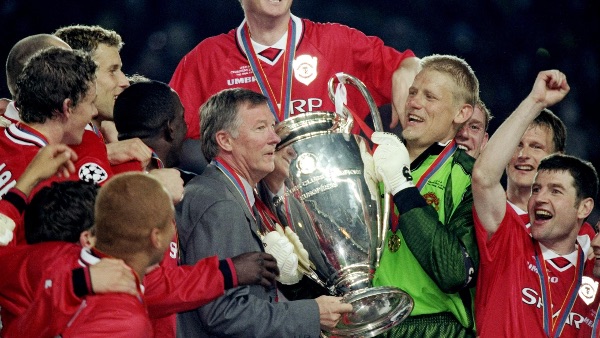
The 1998-1999 season stands as a monumental chapter in Manchester United’s storied history, marked by their unprecedented achievement of the Treble—winning the Premier League, FA Cup, and UEFA Champions League. Under the stewardship of Sir Alex Ferguson, Manchester United not only dominated English football but also etched their name into the annals of global football history. This blog post provides a detailed technical review, comprehensive statistics, and historical context of Manchester United’s remarkable 1998-1999 season across all competitions.
Historical Context
The 1998-1999 season was Manchester United’s seventh in the FA Premier League and their 24th consecutive season in the top tier of English football. Coming off a 1997-1998 season where they finished second to Arsenal, United were determined to reclaim their dominance. The season was notable not only for their on-pitch success but also for off-field developments, including a £600 million takeover bid by BSkyB, which was ultimately blocked by the Monopolies and Mergers Commission in March 1999.
The team underwent significant changes before the season. Veterans Gary Pallister and Brian McClair departed, but United bolstered their squad with key signings: Dutch defender Jaap Stam (£10.75 million from PSV Eindhoven), Trinidadian striker Dwight Yorke (£12.6 million from Aston Villa), and Swedish winger Jesper Blomqvist. These acquisitions proved pivotal, blending defensive solidity, attacking flair, and squad depth. Goalkeeper Peter Schmeichel announced his departure for Sporting CP at season’s end, adding an emotional undercurrent to the campaign.
The season was also a landmark for English football. The Premier League’s turnover rose to £281 million, the Academy system was established, and England secured three Champions League qualification spots for the first time. Manchester United’s financial prowess was evident, with a turnover of £88 million for 1996-1997, making them the richest club globally at the time.
Technical Review
Tactical Setup and Philosophy
Manchester United’s success in 1998-1999 was built on Sir Alex Ferguson’s tactical flexibility and the squad’s “never-say-die” mentality, a hallmark of his teams. United primarily deployed a 4-4-2 formation, which allowed for balance between defensive stability and attacking dynamism. The system relied on:
Defensive Solidity: Jaap Stam and Ronny Johnsen formed a robust center-back partnership, with Gary Neville and Denis Irwin providing reliability and width from the full-back positions. Peter Schmeichel’s commanding presence in goal was crucial, particularly in high-stakes matches.
Midfield Versatility: The midfield quartet of David Beckham (right), Roy Keane (central), Paul Scholes (central), and Ryan Giggs (left) offered a blend of creativity, work rate, and goal-scoring threat. Keane’s leadership and tenacity drove the team, while Beckham’s crossing and Scholes’ incisive passing unlocked defenses.
Attacking Fluidity: The partnership of Dwight Yorke and Andy Cole was a revelation, combining Yorke’s intelligent movement and Cole’s clinical finishing. Substitutes like Ole Gunnar Solskjaer and Teddy Sheringham added depth, often proving decisive in late comebacks.
Ferguson’s ability to adapt was evident in Europe, where United occasionally shifted to a 4-2-3-1 or 4-3-3 to counter stronger opponents like Juventus and Bayern Munich. The team’s high pressing, quick transitions, and reliance on wide play made them formidable, particularly in the Champions League.
Key Moments and Matches
The season was defined by dramatic comebacks and clutch performances:
Premier League: United clinched the title on the final day with a 2-1 comeback victory over Tottenham Hotspur, finishing one point ahead of Arsenal (W22 D13 L3, 80 points). A standout moment was their 8-1 thrashing of Nottingham Forest on February 6, 1999, with Solskjaer scoring four goals in 14 minutes off the bench, a Premier League record for a substitute.
FA Cup: United’s path included victories over Middlesbrough, Liverpool, Chelsea, and a dramatic semi-final replay against Arsenal, where Ryan Giggs’ extra-time solo goal secured a 2-1 win. The final saw a 2-0 victory over Newcastle United, with goals from Sheringham and Scholes.
UEFA Champions League: United navigated a tough group stage with Bayern Munich, Barcelona, and Brøndby, advancing to the knockout rounds. They overcame Inter Milan and Juventus in the quarter-finals and semi-finals, respectively, before a historic 2-1 comeback against Bayern Munich in the final on May 26, 1999. Sheringham and Solskjaer scored in stoppage time to secure the title, a moment etched in football lore.
Other Competitions: United lost 1-0 to Arsenal in the Charity Shield and were knocked out in the League Cup fifth round by Tottenham Hotspur, the eventual winners. They also lost 1-0 to Lazio in the UEFA Super Cup and won the Intercontinental Cup 1-0 against Palmeiras, with Roy Keane scoring the decisive goal.
Statistical Highlights
Manchester United played 62 matches across all competitions, losing only five times (three in the Premier League, one in the League Cup, and one in the Charity Shield). Their 33-match unbeaten run across all competitions, starting December 26, 1998, underscored their resilience.
Premier League Stats (38 matches, W22 D13 L3, 80 points)
Goals Scored: 80 (2.11 per game)
Goals Conceded: 37 (0.97 per game)
Top Scorers: Dwight Yorke (18), Andy Cole (17), Ole Gunnar Solskjaer (12)
Clean Sheets: 13
Key Match: 8-1 vs. Nottingham Forest (February 6, 1999), United’s record away win in the Premier League.
FA Cup Stats (6 matches, W6 D0 L0)
Goals Scored: 10
Goals Conceded: 2
Key Moment: Ryan Giggs’ extra-time goal vs. Arsenal in the semi-final replay, voted the best goal in FA Cup history.
UEFA Champions League Stats (13 matches, W7 D4 L2)
Goals Scored: 29
Goals Conceded: 16
Top Scorers: Dwight Yorke (8), Andy Cole (5)
Key Match: 2-1 vs. Bayern Munich (final), with stoppage-time goals from Sheringham and Solskjaer.
Total Stats Across All Competitions (62 matches)
Wins: 41
Draws: 16
Losses: 5
Goals Scored: 128 (2.06 per game)
Goals Conceded: 56 (0.90 per game)
Win Percentage: 66.13%
Player Contributions
Dwight Yorke: 29 goals, 13 assists across all competitions. His partnership with Cole was lethal, combining for 53 goals.
David Beckham: 6 goals, 13 assists in the Premier League; named UEFA Club Footballer of the Year and runner-up for the 1999 Ballon d’Or.
Roy Keane: Anchored the midfield with 3 goals and 8 assists, scoring the decisive goal in the Intercontinental Cup.
Peter Schmeichel: 22 clean sheets across all competitions, pivotal in the Champions League final.
Historical Significance
The 1998-1999 season is widely regarded as Manchester United’s finest hour, with the Treble marking them as the first English club to achieve this feat. The dramatic Champions League final comeback against Bayern Munich, sealed in “Fergie Time,” became a defining moment in football history. The season showcased United’s resilience, with late goals and comebacks epitomizing their spirit.
The Treble elevated Sir Alex Ferguson’s legacy, earning him a knighthood and the Freedom of the City of Glasgow. Fans and analysts consider this team, alongside the 1950s Busby Babes, as the benchmark for Manchester United’s greatness. However, in a 2007 ranking by The Daily Telegraph and World Soccer Magazine, United’s 1999 team was placed 20th among the greatest football teams, behind Liverpool’s 1977 side, reflecting the subjective nature of such rankings.
The season also had cultural and commercial impacts. Over 500,000 fans lined Manchester’s streets to celebrate the Treble, and United became the world’s most valuable sporting brand. David Beckham’s global stardom soared, culminating in his UEFA Club Footballer of the Year award.
Technical Analysis: Strengths and Weaknesses
Strengths
Squad Depth: Substitutes like Solskjaer and Sheringham often turned games, with Solskjaer’s four goals against Nottingham Forest and his Champions League final winner exemplifying United’s bench strength.
Tactical Flexibility: Ferguson’s ability to switch formations and adjust strategies mid-game, particularly in Europe, outwitted opponents like Juventus’ Marcello Lippi.
Mental Resilience: United’s knack for late goals (e.g., Champions League final, FA Cup semi-final) reflected their mental fortitude, instilled by Ferguson’s leadership.
Key Signings: Jaap Stam’s defensive prowess and Dwight Yorke’s goal-scoring instinct addressed previous weaknesses, elevating United’s performance.
Weaknesses
Early Season Struggles: United’s three Premier League losses (including a 3-2 home defeat to Middlesbrough) exposed vulnerabilities, particularly in defense before Stam fully settled.
Limited Rotation in Goal: Schmeichel’s departure announcement and lack of a reliable backup (Raimond van der Gouw was a stopgap) posed risks, though Schmeichel’s performances mitigated this.
Injuries and Suspensions: Keane and Scholes missed the Champions League final due to suspensions, forcing Ferguson to rely on less experienced players like Nicky Butt.
Conclusion
The 1998-1999 season was a defining moment for Manchester United, showcasing their tactical brilliance, squad depth, and unyielding spirit. The Treble cemented Sir Alex Ferguson’s legacy and elevated players like Beckham, Yorke, and Keane to legendary status. With only five losses in 62 matches, United’s statistical dominance and dramatic victories—like the Champions League final comeback—remain iconic. This season not only reshaped Manchester United’s identity but also set a benchmark for excellence in English football.
For further details, explore match statistics on FBref.com or relive the Champions League final on UEFA.com.