Manchester United Match Report: A Gritty Draw at Elland Road Against Leeds United - January 4, 2026

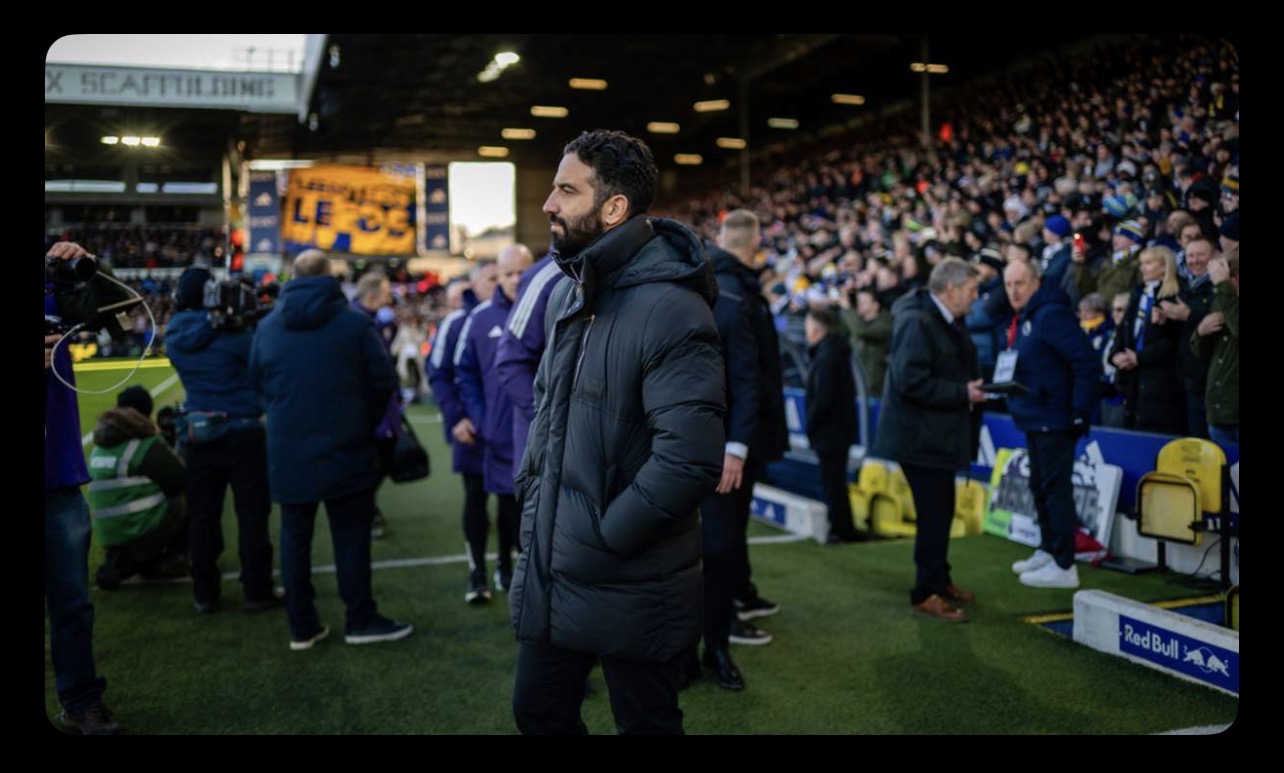
As a lifelong Manchester United supporter who’s bled red since the days of Sir Alex Ferguson’s dominance, there’s nothing quite like the electric buzz of a clash with Leeds United. This rivalry, steeped in history from the Roses Wars to the fierce battles of the 1970s and beyond, always promises drama, passion, and unyielding intensity. Yesterday’s Premier League encounter at Elland Road on January 4, 2026, was no exception. Under the stewardship of Ruben Amorim, our Red Devils traveled to West Yorkshire to face Daniel Farke’s resurgent Leeds side, and what unfolded was a tense, hard-fought 1-1 draw that left fans on both sides with mixed emotions. While we didn’t secure all three points, the resilience shown by the team in coming back from behind was a testament to the fighting spirit that’s defined Manchester United for generations. It wasn’t our most polished performance, but in a season riddled with injuries and inconsistencies, snatching a point from a hostile environment like Elland Road feels like a small victory. Let’s dive deep into the match, analyzing every facet with the enthusiasm of a true Red but the fairness of an objective reporter.
First, let’s set the scene with the pre-match context. Manchester United arrived in Leeds sitting in mid-table, with an 8-7-5 record and 31 points, boasting a +4 goal difference. We’ve been on a patchy run under Amorim, with only one win in our last five games heading into this fixture, but there’s been glimpses of the tactical acumen that made him a sensation at Sporting Lisbon. The Portuguese manager has instilled a more structured 3-4-3 formation, emphasizing quick transitions and high pressing, but injuries have hampered our progress. We were missing eight first-team players, including key figures like Bruno Fernandes and Marcus Rashford, forcing Amorim to rely on youth and squad depth. On the flip side, Leeds were unbeaten in their last six matches, extending that to seven with this result, sitting at 5-7-8 with 22 points and a -7 goal difference. They too had absences, notably Joe Rodon, Ethan Ampadu, and Jayden Bogle, but their home form at Elland Road—bolstered by a raucous crowd of 36,909—has been a fortress. The atmosphere was palpable even through the screens; chants echoing from both sets of fans, the air thick with anticipation for this historic rivalry.
Lineups reflected the tactical approaches. Amorim opted for a back three of Diogo Dalot, Lisandro Martínez (our captain for the day), and Leny Yoro, with Ayden Heaven and Luke Shaw providing width. In midfield, Manuel Ugarte and Casemiro anchored, flanked by Patrick Dorgu, while up top, Matheus Cunha and Benjamin Šeško led the line. It was a blend of experience and youth, with Senne Lammens in goal looking to build on recent solid displays. For Leeds, Farke went with a 3-5-2: Lucas Perri between the sticks, a defensive trio including Pascal Struijk (captain), Jaka Bijol, and Sebastiaan Bornauw, midfield packed with Brenden Aaronson, Ilia Gruev, Anton Stach, and Noah Okafor, and Dominic Calvert-Lewin as the focal point upfront. It was clear from the outset that Leeds aimed to exploit their home advantage with high energy and direct play, while United sought to control possession and hit on the counter.
The match kicked off at 12:30 PM local time under referee Jarred Gillett’s watch, and the intensity was immediate. Elland Road roared as the teams emerged, and within minutes, Manuel Ugarte tested the waters with a looping header that landed on the roof of the net— a sign of our intent to dominate aerial duels. Leeds responded with vigor, Calvert-Lewin driving a shot over the bar under pressure from Martínez, who was immense in marshalling the defense. As a fan, it’s thrilling to see Licha’s leadership; his reading of the game is world-class, and he set the tone early. Around the 20-minute mark, Cunha thought he’d opened the scoring with a fine strike, but the offside flag denied him—a marginal call that had United fans fuming, but fair play to the officials. The first half was a chess match, with both sides probing but lacking that killer edge. At 35 minutes, Anton Stach delivered a curling cross that Calvert-Lewin met with a header clipping the post— a let-off for Lammens, who was rooted. Five minutes later, Yoro rose highest from a Casemiro nod-back on a corner, forcing Perri into a superb tip-over save. These moments highlighted United’s set-piece threat, an area Amorim has drilled relentlessly.
As the half wore on, possession edged in United’s favor at 54% overall, but Leeds’ 46% was deceptive—they were efficient in transitions. Our passing accuracy stood at 78% (435/560), superior to Leeds’ 70% (328/471), allowing us to build from the back. Tackles were fierce, with United winning 25 to Leeds’ 18, and interceptions favored Leeds at 17-8, showing their pressing disrupted our rhythm at times. Fouls were even at 9 apiece, with no cards issued—a credit to both teams’ discipline in such a heated affair. Corners saw Leeds edge 6-4, but we cleared danger effectively with 40 clearances to their 23. Half-time arrived at 0-0, and as a United fan, I felt optimistic; we had more touches (704 to 597) and looked the more composed side, but needed to convert chances.
Analytically, the first half’s xG was telling. United generated 0.8 xG from their opportunities, slightly ahead of Leeds’ 0.4, reflecting our dominance in creating higher-quality chances. Shots totaled 7 for us (1 on target) versus 4 for them (1 on target), but the woodwork and saves kept it level. Casemiro was pivotal, completing 58/73 passes (79.5%) and making 3 tackles, while Ugarte’s energy covered ground effectively. For Leeds, Struijk’s 7 aerials won and 4 tackles stood out. Tactically, Amorim’s 3-4-3 allowed Shaw and Dalot to push forward, creating width, but Leeds’ midfield overcrowding stifled our creativity. It was a half where United looked the better team but lacked ruthlessness—a familiar theme this season.
The second half exploded into life. Leeds came out firing, Gudmundsson forcing a near-post save from Lammens around the 50-minute mark. Ugarte then missed the target for us, but at 54 minutes, Šeško headed off target from a Casemiro cross—a chance with 0.35 xG wasted. The turning point came at 62 minutes: Struijk hooked a hopeful ball forward, Heaven hesitated slightly, and Aaronson pounced, firing low past Lammens from 14 yards (0.30 xG). Elland Road erupted, and suddenly we were behind 1-0. As a fan, it was gut-wrenching—a defensive lapse in an otherwise solid display. But credit to Leeds; Aaronson’s composure was clinical.
Amorim reacted swiftly, subbing on Joshua Zirkzee for Yoro at 63 minutes, shifting to a more attacking setup. The impact was immediate. At 65 minutes, Zirkzee threaded a pass to Cunha, who coolly slotted home from 16 yards (0.06 xG, but executed brilliantly). 1-1! The away end went wild, and Cunha’s celebration was pure passion—he’s becoming a cult hero at Old Trafford with his work rate and finishing. This quick response epitomized United’s resilience; we didn’t panic, and the substitute’s assist was a masterstroke.
The game opened up thereafter. Okafor’s overhead kick at 70 minutes (0.13 xG) was saved smartly by Lammens. Leeds made changes: Lukas Nmecha for Okafor at 75’, Ao Tanaka for Gruev at 80’, and Joël Piroe for Aaronson at 87’. Piroe threatened late, but our defense held firm. For United, Cunha clipped the post at around 85 minutes, and Šeško spurned a glorious chance from a Zirkzee cutback at 75’. The final whistle blew at 1-1, a fair result given the balance of play. We moved up to fifth, two points off the top four, while Leeds stayed in 16th but extended their unbeaten run.
Now, let’s delve into the analytical meat of the match—the stats and visuals that paint the full picture. Overall, United dominated key metrics: 15 shots to Leeds’ 10, though only 2 on target versus their 3. Our xG of 1.6 dwarfed their 0.9, indicating we created better chances but lacked clinical finishing. Progressive passes were close (United 35, Leeds 41), but our SCA (shot-creating actions) at 28 outpaced their 15, and GCA (goal-creating actions) 2-1. Take-ons saw us succeed 5/12 (41.7%) to their 4/17 (23.5%), showing more dribbling flair.
To visualize the goal timeline, here’s a line chart tracking the cumulative goals for both teams:
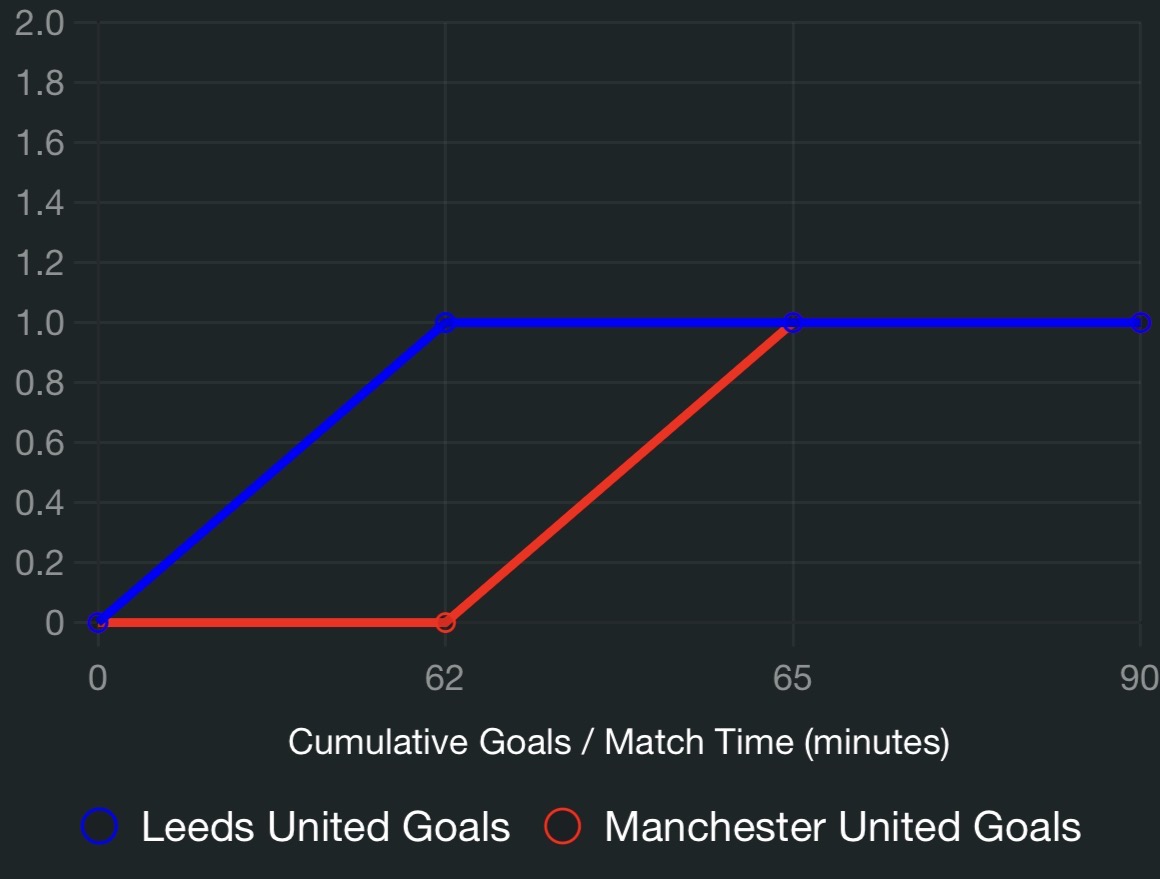
This chart illustrates how the game was goalless until the frantic three-minute spell in the second half, where Leeds took the lead before United equalized almost instantly—a hallmark of our never-say-die attitude.
Diving deeper into shots, United’s 15 attempts highlight our attacking intent, though conversion was an issue. Leeds’ efficiency shone with 3/10 on target. To break it down temporally, consider this line chart of cumulative shots:
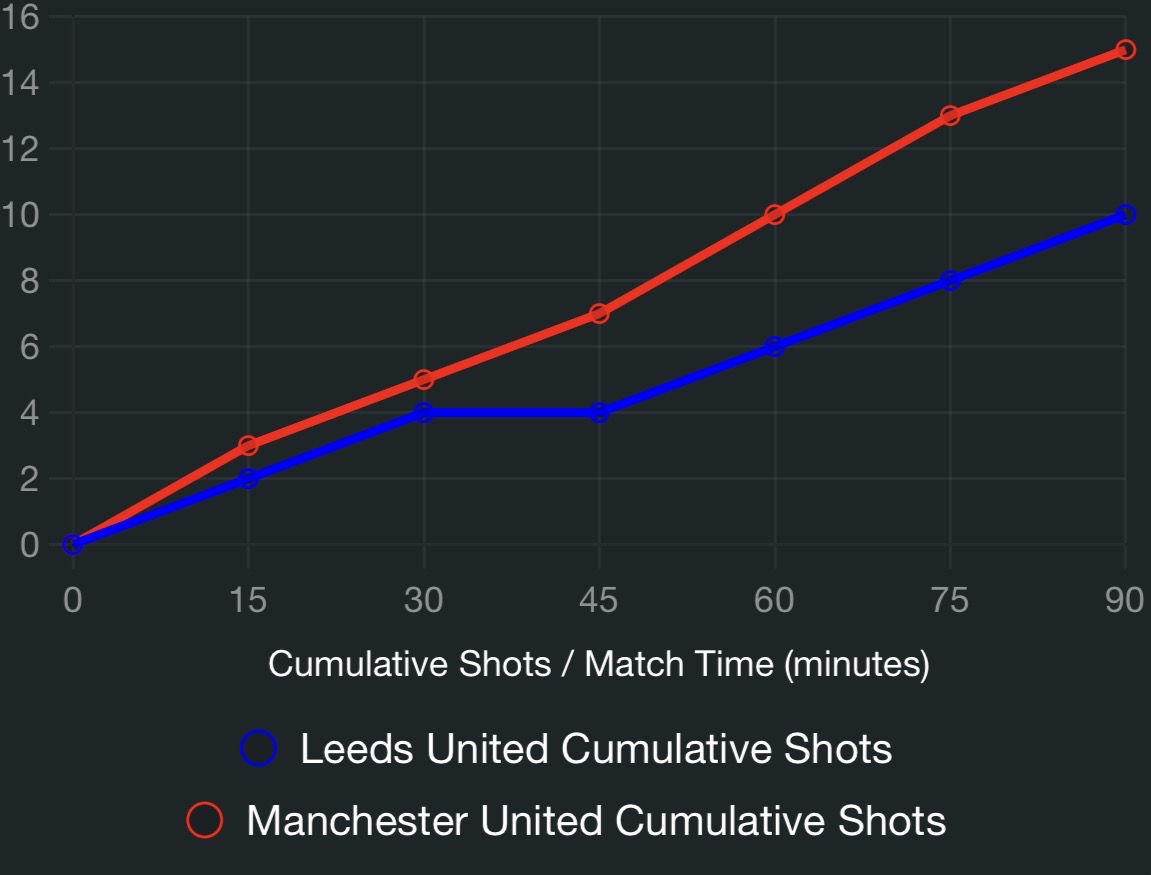
The chart shows United pulling away in shot volume as the game progressed, especially post-half-time, aligning with our 54% possession. This dominance in attempts (peaking at 15) underscores Amorim’s push for offensive overloads, but the low on-target rate (13%) points to areas for improvement—perhaps sharper finishing drills in training.
Player performances deserve thorough scrutiny. Starting with our hero, Matheus Cunha: 1 goal, 3 shots (1 on target), 71 touches, 31/46 passes (67.4%), 2 interceptions, 3 successful take-ons. He’s a bundle of energy, pressing relentlessly and linking play superbly. As a fan, his equalizer was a moment of magic—slipping past Perri with composure that belied the pressure. Benjamin Šeško, his strike partner, had 3 shots (0 on target, including a 0.35 xG header), 46 touches, 26/34 passes (76.5%), and created 1 chance. The young Slovenian showed promise but missed key opportunities; with time, he’ll be lethal. In midfield, Casemiro was a rock: 91 touches, 58/73 passes (79.5%), 3 tackles, 6 blocks. At 33, his experience shone, breaking up play and distributing wisely. Ugarte complemented him well, though his finishing needs work.
Defensively, Lisandro Martínez led by example: his aerial presence and positioning were crucial in limiting Calvert-Lewin. Leny Yoro, before subbing off, showed maturity beyond his years with a key header chance. Luke Shaw’s return added quality on the left, contributing to progressive moves. Senne Lammens made 2/3 saves (66.7%), including vital stops from Gudmundsson and Okafor. Sub Zirkzee changed the game with his assist, proving Amorim’s bench depth.
For Leeds, fairly, Aaronson was their star: 1 goal, 2 shots (1 on target), 47 touches, 26/34 passes (76.5%). His opportunism punished our lapse. Struijk’s assist and defensive work (37/50 passes, 4 tackles, 3 interceptions, 7 aerials) were impressive. Stach’s 40/58 passes and 5 tackles drove their midfield. Calvert-Lewin was a handful but inefficient, while Perri’s save from Yoro was top-class.
Tactically, Amorim’s system allowed 10 crosses and 70 long balls, balancing control with directness. Leeds’ 20 crosses and 78 long balls suited their style, but our 16 throw-ins and 11 goal kicks showed defensive solidity. Offsides (us 3, them 1) and corners reflect the ebb and flow.
In conclusion, this 1-1 draw was a fair outcome in a pulsating rivalry match. As a devoted United fan, I’m enthusiastic about the grit shown—coming back quickly, dominating stats, and moving to fifth. Yet, fairly, missed chances cost us; with a full squad, we’d have won. Amorim’s project is building, and points like this will fuel our push for Europe. Onward to the next—glory glory Man United!